


Weathering resistance refers to the ability of a material to withstand the effects of various environmental factors such as sunlight, rain, wind, temperature changes, and chemical exposure over time without significant degradation. For a Cement Mesh supplier, understanding the weathering resistance of cement mesh is of utmost importance as it directly impacts the quality, durability, and performance of the product in real - world applications.
Composition and Structure Affecting Weathering Resistance
Cement mesh is typically composed of cement, aggregates, and often reinforced with fibers or metal wires. The cement matrix provides the basic structure and binding force. High - quality cement with proper chemical composition can enhance the weathering resistance. For example, Portland cement, a common type used in cement mesh, has good initial strength development and durability. Aggregates, such as sand and gravel, fill the spaces in the cement matrix and contribute to the overall strength. Well - graded aggregates can improve the density and compactness of the cement mesh, reducing the porosity and thus enhancing its resistance to weathering agents.
The reinforcement materials in cement mesh also play a crucial role. Fibers, like glass fibers or polypropylene fibers, can improve the crack - resistance of the mesh. When the cement mesh is exposed to environmental stresses, these fibers help to distribute the stress evenly and prevent the formation and propagation of cracks. Metal wires, on the other hand, can provide additional tensile strength. However, if the metal wires are not properly protected, they may corrode when exposed to moisture and oxygen, which can lead to the degradation of the cement mesh over time.
Impact of Environmental Factors on Cement Mesh
Sunlight
Ultraviolet (UV) radiation from sunlight can cause the cement mesh to undergo photo - degradation. Over long - term exposure, UV rays can break down the chemical bonds in the cement matrix, leading to surface discoloration, loss of gloss, and in some cases, surface cracking. This is especially a concern in regions with high levels of sunlight. For example, in desert areas, the intense sunlight can accelerate the aging process of cement mesh. To mitigate this effect, some cement mesh products are treated with UV - resistant coatings or additives that can absorb or reflect UV radiation.

Rain and Moisture
Rain and moisture can penetrate the pores of the cement mesh. If the mesh has high porosity, water can accumulate inside, leading to freeze - thaw damage in cold climates. When water freezes, it expands, creating internal stress that can cause the cement mesh to crack and spall. Moreover, moisture can also carry dissolved salts and chemicals, which can react with the cement matrix and cause chemical corrosion. For instance, sulfates in groundwater or industrial pollutants in rain can react with the calcium hydroxide in the cement, forming expansive compounds that can damage the structure of the cement mesh.
Temperature Changes
Extreme temperature changes can cause the cement mesh to expand and contract. In hot weather, the mesh expands, while in cold weather, it contracts. If the mesh is not flexible enough to accommodate these dimensional changes, internal stresses can build up, leading to cracking. In addition, large temperature differentials between the surface and the interior of the cement mesh can also cause thermal shock, which can further damage the material.
Wind
Wind can carry abrasive particles such as sand and dust, which can erode the surface of the cement mesh over time. Strong winds can also cause mechanical stress on the mesh, especially if it is installed in an exposed location. For example, in coastal areas with strong sea breezes, the wind - borne salt particles can not only erode the surface but also accelerate the corrosion of any metal components in the cement mesh.
Testing and Evaluation of Weathering Resistance
To ensure the weathering resistance of cement mesh, various testing methods are employed. One common method is the accelerated weathering test. In this test, the cement mesh samples are exposed to artificial environmental conditions that simulate long - term natural weathering in a short period. For example, the samples may be subjected to cycles of UV radiation, high - humidity, and temperature changes. By measuring the changes in physical and chemical properties of the samples, such as strength, weight loss, and surface appearance, the weathering resistance of the cement mesh can be evaluated.
Another important test is the salt - spray test, which is used to evaluate the corrosion resistance of the metal components in the cement mesh. The samples are exposed to a salt - water mist for a certain period, and then the degree of corrosion is assessed. This test is particularly relevant for cement mesh used in coastal or industrial areas where there is a high risk of corrosion.
Applications and the Importance of Weathering Resistance
Cement mesh has a wide range of applications, including Protective Nets, Shelf Grids, and as a general construction material in Cement Mesh - related projects.
In the case of protective nets, the weathering resistance is crucial as they are often installed outdoors to provide protection against falling objects or to prevent access to restricted areas. If the cement mesh used in the protective nets does not have good weathering resistance, it may degrade over time, reducing its protective function.
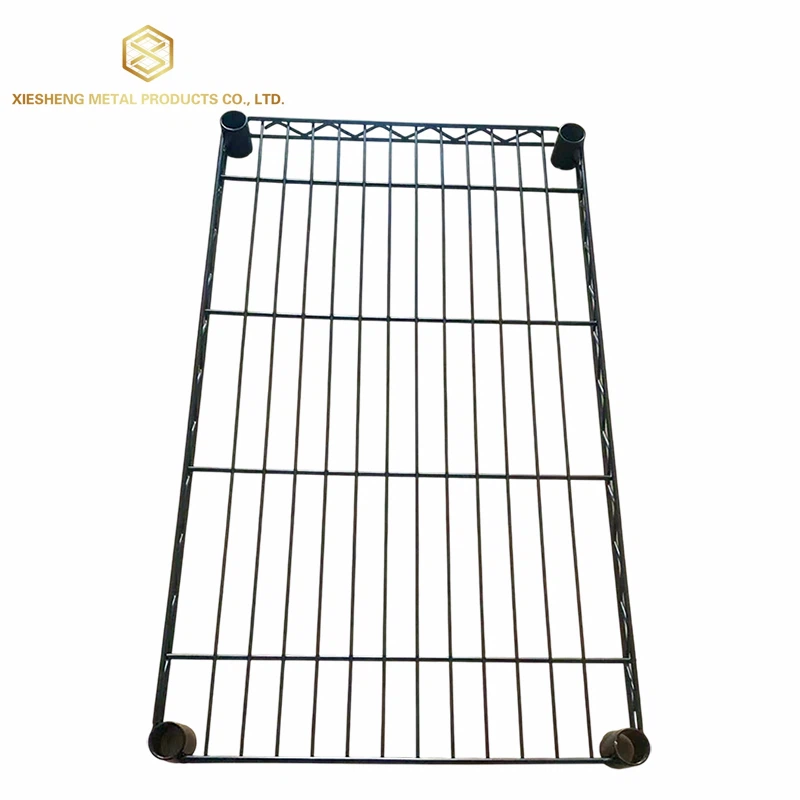
For shelf grids, especially those used in outdoor storage or industrial settings, the ability to withstand weathering is essential. Shelf grids need to maintain their structural integrity to support the weight of stored items. Weathering - induced damage such as cracking or rusting can compromise the strength of the grids, leading to potential safety hazards.
In construction projects, cement mesh can be used as reinforcement in walls, floors, or other structural elements. The long - term durability of these structures depends on the weathering resistance of the cement mesh. A high - quality cement mesh with excellent weathering resistance can ensure the stability and safety of the building over its service life.
Improving the Weathering Resistance of Cement Mesh
As a Cement Mesh supplier, there are several ways to improve the weathering resistance of our products. Firstly, we can optimize the mix design of the cement mesh. By using high - quality cement and well - graded aggregates, and adjusting the proportion of each component, we can improve the density and compactness of the mesh, reducing its porosity and water absorption.
Secondly, we can add appropriate additives and admixtures. For example, waterproofing agents can reduce the water penetration into the cement mesh, while corrosion inhibitors can protect the metal components from rusting. UV - resistant additives can also be incorporated to enhance the resistance to sunlight.
Thirdly, proper surface treatment can be applied. Coating the cement mesh with a protective layer, such as a polymer - based coating, can provide an additional barrier against environmental factors. This coating can prevent the penetration of water, UV rays, and chemicals, and also improve the aesthetic appearance of the mesh.
Conclusion
In conclusion, the weathering resistance of cement mesh is a critical property that determines its performance and durability in various applications. As a Cement Mesh supplier, we are committed to providing high - quality products with excellent weathering resistance. Through continuous research and development, optimization of production processes, and strict quality control, we ensure that our cement mesh can withstand the harsh environmental conditions and meet the needs of our customers.
If you are interested in our Cement Mesh products or have any questions regarding their weathering resistance and applications, please feel free to contact us for procurement and further discussions. We look forward to working with you to provide the best solutions for your projects.
References
- Neville, A. M. (1995). Properties of Concrete. Longman Scientific & Technical.
- Mehta, P. K., & Monteiro, P. J. M. (2013). Concrete: Microstructure, Properties, and Materials. McGraw - Hill Education.
- ASTM International. (2018). Standard test methods for evaluating the weathering resistance of building materials. ASTM standards.


