


As a supplier of Cement Mesh, I often encounter inquiries regarding the wide - ranging applications and properties of this versatile product. One frequently asked question is about its sound insulation property. In this blog, I'll delve into the details of the sound insulation characteristics of Cement Mesh, its influencing factors, and its significance in different settings.
Understanding Cement Mesh
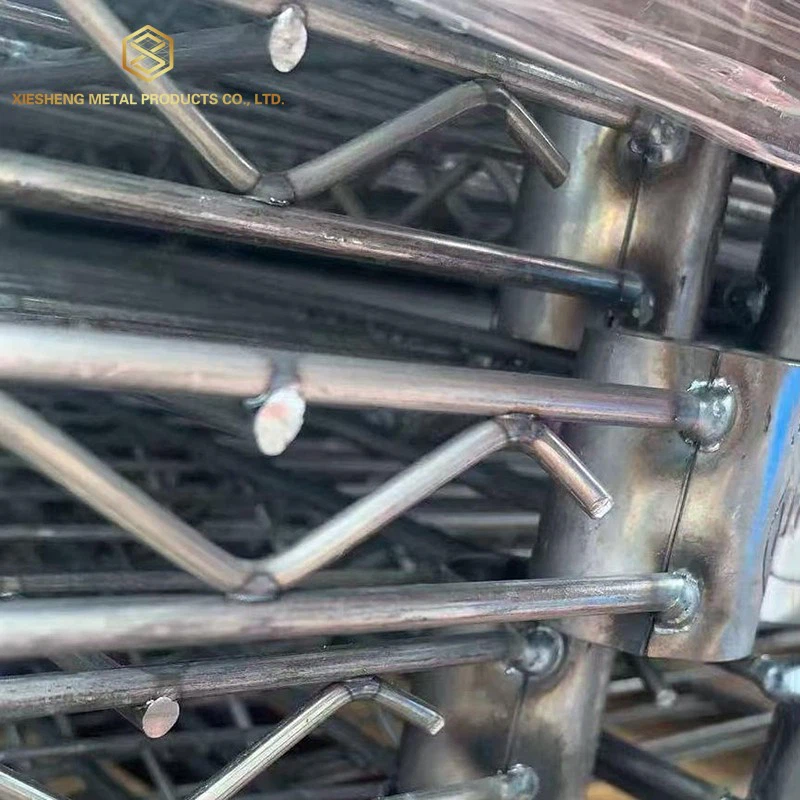
Before discussing sound insulation, let's briefly introduce Cement Mesh. Cement Mesh, available at Cement Mesh, is a type of mesh made from various materials such as steel, fiberglass, or plastic, and is commonly used in construction and other industries. It is often embedded in cement or concrete structures to enhance their strength, durability, and stability. The mesh structure provides reinforcement, preventing cracking and improving the overall performance of the cement - based materials.
Sound Insulation Mechanisms of Cement Mesh
The sound insulation of Cement Mesh is based on several physical principles. When sound waves encounter a material, they can be reflected, absorbed, or transmitted through it. For Cement Mesh, the sound insulation process mainly involves the following aspects:
Reflection
The structure of Cement Mesh can cause sound waves to bounce off its surface. The mesh pattern creates multiple interfaces and irregularities, which increase the probability of sound wave reflection. When a sound wave hits the mesh, part of its energy is reflected back, reducing the amount of sound that can pass through to the other side. For example, in a steel Cement Mesh, the high - density steel material reflects a significant portion of low - frequency sound waves due to its high acoustic impedance, which is a measure of a material's resistance to the flow of sound.

Absorption
Cement Mesh also has some sound - absorbing capabilities. The space within the mesh structure can trap sound waves, causing them to lose energy through friction and vibration. Fiberglass Cement Mesh, for instance, is known for its relatively good sound - absorption properties. Fiberglass fibers can convert the kinetic energy of sound waves into heat energy through internal friction, effectively reducing the intensity of the sound.
Transmission Loss
The presence of the cement around the mesh further contributes to sound insulation. Cement is a dense material with a high mass, which is effective in reducing the transmission of sound. When combined with the mesh, the overall structure can significantly increase the transmission loss of sound. Transmission loss is a measure of how much sound is attenuated as it passes through a material or structure. In a well - constructed Cement Mesh and cement composite, the transmission loss can be quite substantial, especially for mid - and high - frequency sounds.
Factors Affecting the Sound Insulation Property of Cement Mesh
The sound insulation performance of Cement Mesh is not fixed and can be influenced by several factors:
Material of the Mesh
Different materials used in Cement Mesh have different acoustic properties. Steel mesh has high density and stiffness, which is good for reflecting low - frequency sounds. On the other hand, fiberglass mesh, with its porous and fibrous nature, is more effective at absorbing high - frequency sounds. Plastic mesh, having a lower density, may provide less sound insulation compared to steel or fiberglass.
Mesh Structure
The size of the mesh openings, the thickness of the wires or strands, and the overall pattern of the mesh all affect sound insulation. A smaller mesh opening size can increase the number of reflection interfaces, thus enhancing reflection and reducing sound transmission. Thicker wires or strands can also provide more mass, improving the structure's ability to resist sound propagation.
Cement Composition
The type of cement used and its additives can influence the sound insulation of the composite. For example, cement with lightweight aggregates may have different sound - insulation properties compared to traditional cement. Additives that improve the density or porosity of the cement can also enhance or modify its acoustic performance.
Installation and Application
The way Cement Mesh is installed and used in a structure is crucial for its sound insulation. A well - installed mesh that is properly embedded in the cement and forms a continuous structure will provide better sound insulation than a poorly installed one. Additionally, the application environment, such as whether it is used in a wall, floor, or ceiling, can also affect the overall sound - insulation performance.
Applications of Cement Mesh for Sound Insulation
Cement Mesh's sound - insulation properties make it suitable for a variety of applications:
Construction
In residential and commercial buildings, Cement Mesh can be used in interior and exterior walls, floors, and ceilings to reduce noise transmission. For example, in an apartment building, using Cement Mesh in the partition walls can help minimize the noise from neighboring units. In a commercial office, it can be used in ceiling panels to absorb and reduce the reverberation of sound, creating a more comfortable working environment.
Industrial Settings
In factories and industrial facilities, where there is often high - level noise from machinery, Cement Mesh can be incorporated into the building structures to protect workers from excessive noise. It can also be used in the construction of noise barriers around industrial sites to prevent noise pollution from spreading to the surrounding areas.
Transportation Infrastructure
Cement Mesh can be used in the construction of sound - absorbing walls along highways, railways, and airports. These walls help reduce the noise generated by traffic and aircraft, protecting nearby residential and commercial areas.
Comparison with Other Sound - Insulating Materials
When considering sound insulation, Cement Mesh has its own advantages and limitations compared to other materials.
Compared with Protective Nets
Protective Nets are mainly designed for protection purposes such as preventing objects from falling or providing security. While some protective nets may have a certain degree of sound - insulation ability, they are generally not as effective as Cement Mesh in terms of sound reduction. Cement Mesh, with its combination of mesh and cement, provides a more substantial structure for sound insulation.
Compared with Shelf Grids
Shelf Grids are commonly used for storage and display. They are not typically engineered for sound insulation. Cement Mesh, on the other hand, is specifically used in construction and can be optimized for better sound - insulation performance through proper material selection and design.
Conclusion
In conclusion, Cement Mesh has significant sound - insulation properties that are based on reflection, absorption, and transmission loss mechanisms. Its performance is influenced by factors such as the material of the mesh, its structure, the cement composition, and the installation method. With its wide range of applications in construction, industrial settings, and transportation infrastructure, Cement Mesh is a valuable material for sound - insulation purposes.
If you are interested in our Cement Mesh products for their sound - insulation capabilities or other applications, we welcome you to contact us for procurement and further discussion. We can provide you with detailed product information, samples, and professional advice to meet your specific needs.
References
- "Building Acoustics" by Colin H. Hansen and Martin L. Fahnline
- "Acoustic Materials" by Trevor Cox and Peter D'Antonio
- Industry reports on construction materials and their acoustic properties.


