


Hey there, fellow bird lovers! As a bird cage supplier, I've seen firsthand how important proper ventilation is for our feathered friends. In this blog, I'm gonna share some tips on how to ensure your bird cage has the right amount of fresh air.
First off, let's talk about why ventilation is such a big deal. Birds produce a lot of dander, feathers, and waste, which can quickly build up in a cage. Without proper ventilation, these particles can lead to poor air quality, which in turn can cause respiratory problems for your birds. Good ventilation helps to remove these contaminants and keeps the air inside the cage clean and fresh.
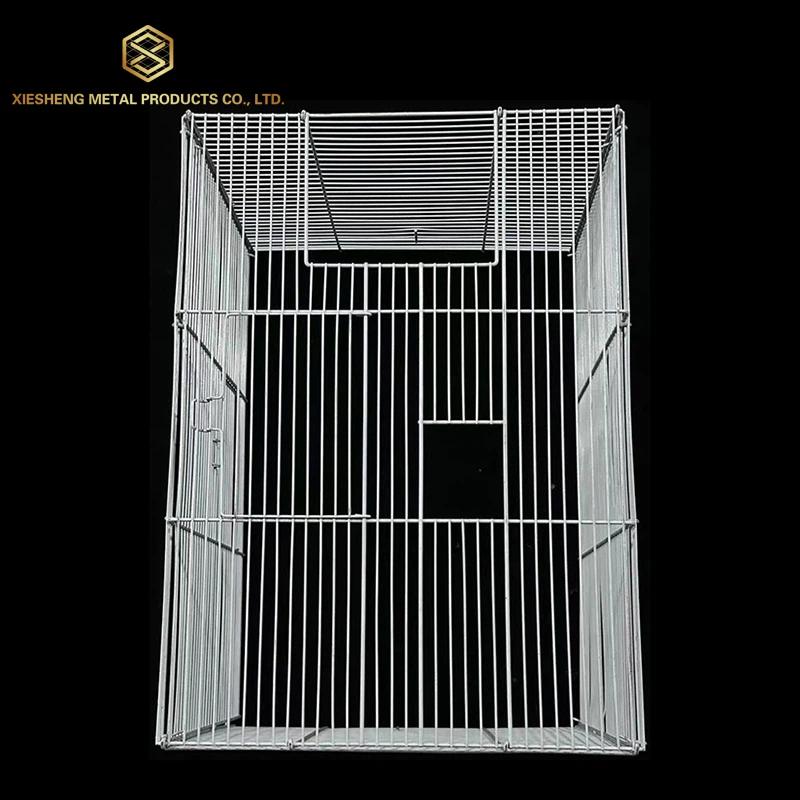
One of the simplest ways to improve ventilation is to choose the right cage. Look for a cage that has plenty of wire mesh or bars. This allows air to flow freely in and out of the cage. For example, our Bird Cage models are designed with a lot of open space to ensure maximum airflow. The more open the cage is, the better the ventilation will be.
Another important factor is the placement of the cage. Don't put the cage in a corner or against a wall where air circulation is restricted. Instead, place it in an open area of the room, away from drafts but still where there is some natural air movement. You can also position the cage near a window (but not directly in the path of sunlight or cold drafts) to let in fresh air. Just make sure the window is screened to prevent your bird from flying out.
You can also use fans to improve ventilation. A small, oscillating fan placed at a safe distance from the cage can help to circulate the air. Make sure the fan is set on a low speed so it doesn't blow too strongly on the birds. This can create a gentle breeze inside the cage, which helps to keep the air moving and prevent the buildup of stale air.
Cleaning the cage regularly is also crucial for maintaining good ventilation. Remove any uneaten food, droppings, and feathers daily. A dirty cage can quickly become a breeding ground for bacteria and mold, which can further reduce air quality. Once a week, do a more thorough cleaning of the cage, including washing the bars and the floor with a bird - safe cleaner.
Adding some natural elements to the cage can also help with ventilation. For example, you can place a small potted plant near the cage. Plants absorb carbon dioxide and release oxygen, which can improve the overall air quality in the area. Just make sure the plant is non - toxic to birds.
Now, let's talk about different types of cages and how ventilation can vary. If you have a large aviary - style cage, ventilation is usually easier to achieve because of its size. However, you still need to make sure there are enough openings for air to flow. On the other hand, smaller cages may require more attention to ventilation. Some smaller cages come with built - in ventilation holes, but you may need to take additional steps to ensure proper air circulation.
If you're considering getting a different type of pet, we also offer Rabbit Cage and Cat Cage options. Each type of pet has different ventilation requirements, but the general principles of good air circulation still apply.
Proper ventilation in a bird cage is essential for the health and well - being of your birds. By choosing the right cage, placing it correctly, using fans, keeping it clean, and adding natural elements, you can ensure that your birds are living in an environment with fresh, clean air.

If you're in the market for a new bird cage or have any questions about ventilation or our products, don't hesitate to reach out. We're here to help you provide the best possible living space for your feathered friends. Whether you're a new bird owner or an experienced one, we can offer you the right advice and the highest - quality cages.
References
- "The Bird Owner's Manual" by Mattie Sue Athan
- "Avian Medicine: Principles and Application" by Michael L. Frye


