

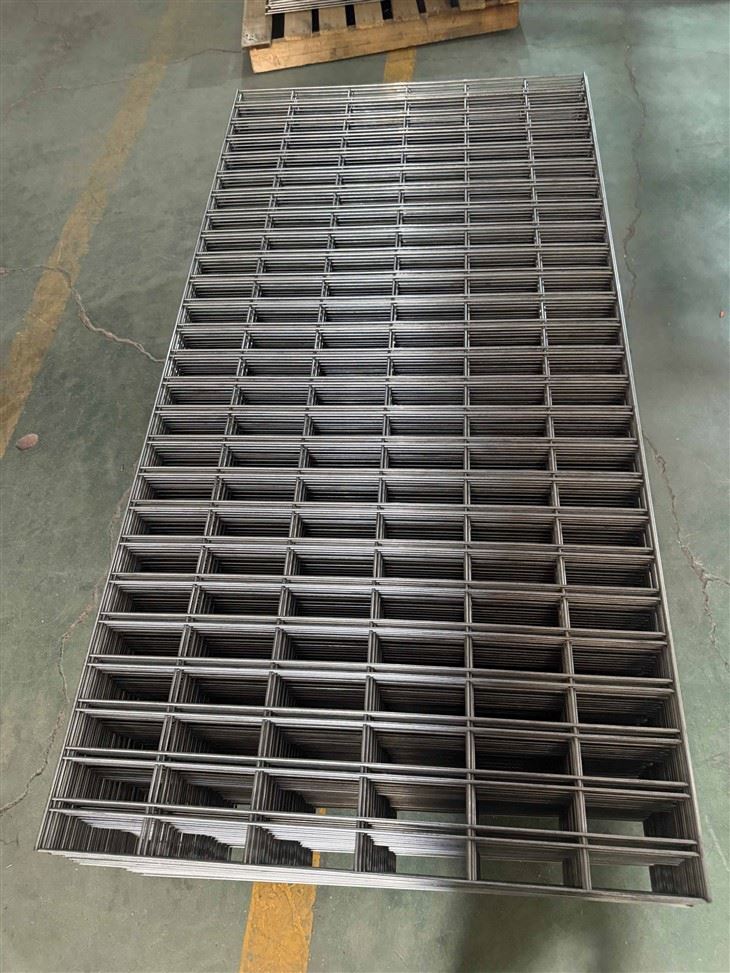
Products Description
When you need to cover vast areas without obstructive columns, our Welded Grid systems are the engineering answer. Designed for stadiums, airports, exhibition halls, and industrial plants, our spatial truss structures deliver unmatched strength-to-weight ratios. We transform complex architectural designs into reality by evenly distributing loads across the entire structure, ensuring your building is not only safe but also visually stunning.
Why Choose Our Welded Grid Systems?
·Massive Span Capability: Cover distances from 20m to over 150m with ease.
·Superior Seismic Performance: Our 3D spatial force system offers excellent ductility and resistance to earthquakes.
·Faster Construction: Utilizing factory-prepared units significantly reduces on-site labor time.
·Custom Geometry: Whether it is squares, triangles, or hexagons, we fabricate to your exact architectural specifications.
Structural Components & Design Excellence
Every Welded Grid is composed of two critical elements that define its strength: Members (Rods) and Nodes.
1. Members: The Skeleton of Strength
We use only premium-grade seamless steel pipes (Q235B/Q355B), square tubes, or H-beams. Our manufacturing process ensures these members are lightweight yet capable of handling heavy loads.
·Precision Specs: Diameter range: 48mm - 219mm | Wall Thickness: 3mm - 12mm.
·Quality Control: Every pipe undergoes straightening to ensure perfect alignment (straightness tolerance ≤ L/1000), preventing assembly errors.
2. Nodes: The Heart of Stability
The node is where strength converges. We offer two primary node solutions based on your project's scale:
·Welded Sphere Joints (For Large Spans >30m):
Perfect for stadiums and large terminals. We utilize pressed hemispheres welded into hollow spheres. This design allows for full-penetration welding at high angles, ensuring the joint is stronger than the rod itself.
·Plate Joints (For Medium/Small Spans):
Ideal for factories and smaller structures. Laser-cut steel plates provide precise connection points, welded using a combination of fillet and plug welds for maximum shear resistance.
Production Protocol
Phase 1: Rod Processing Specifications
Focus: High precision to prevent assembly errors.
| Process Step | Equipment Used | Quality Control Standard |
|---|---|---|
| Cutting | CNC Plasma/Laser Cutter | Length Tolerance: ±1mm (Exceeds standard steel structures). |
| Straightening | Pipe Straightener Machine | Straightness: ≤ L/1000 (Ensures perfect fit). |
| Beveling | CNC Beveling Machine | Angle Tolerance: ±1° Root Face: 1-2mm (Ensures no incomplete fusion). |
| Coating | Automatic Spraying Line | Adhesion: ≥ 5MPa (Cross-hatch test) Thickness: ≥ 60μm. |
Phase 2: Welding & Assembly Control
Focus: Eliminating deformation and stress concentration.
| Process Step | Methodology | Quality Control Standard |
|---|---|---|
| Pre-Assembly | Unitized Block Assembly | Platform Leveling: ≤ 2mm/10m Grid Size Tolerance: ±2mm. |
| Welding Sequence | Symmetrical Welding Segmented Step-Back Welding |
Prevents cumulative deformation. Reduces heat input distortion. |
| Stress Relief | Local Annealing (Optional) | Heating to 600-650°C, slow cooling to relieve residual stress. |
| Final Check | Destructive & Non-Destructive | 100% NDT (UT+MT): No pores, cracks, or incomplete penetration. |
Rigorous Quality Assurance: Built to Last
As a load-bearing structure, our quality inspections exceed standard steel construction requirements.
| Inspection Stage | Key Control Parameters |
|---|---|
| Factory Phase | Rod length (±1mm), Bevel angle (±1°), Primer thickness (≥60μm), Pre-assembled unit geometry. |
| Welding Integrity | 100% Non-Destructive Testing (NDT): UT (Ultrasonic) and MT (Magnetic Particle) testing on all welds to ensure zero pores or cracks. |
| On-Site Verification | Support bolt torque (using calibrated wrenches), Overall deflection (must be ≤ L/250), Spatial coordinates (using Total Station). |
| Final Acceptance | Load Testing: For critical projects, we conduct graded loading tests to verify stress distribution and deflection under simulated real-world conditions. |
Why Our Welded Grids Outperform Traditional Structures
Switching from flat trusses or concrete roofs to a spatial Welded Grid offers significant advantages:
·Lighter Weight: Our grids weigh only 30-50kg/m² compared to 200-300kg/m² for concrete. This reduces foundation costs.
·Faster Build Time: With 60-80% of the work done in the factory, on-site installation is quick and clean.
·Better Aesthetics: The geometric patterns of the grid are often left exposed, creating a modern, industrial architectural statement.
·Superior Safety: The spatial structure has no single point of failure; if one rod is stressed, the load is redistributed instantly.
Hot Tags: welded grid, China welded grid manufacturers, factory


